Food as Nourishment in the Birth Chart
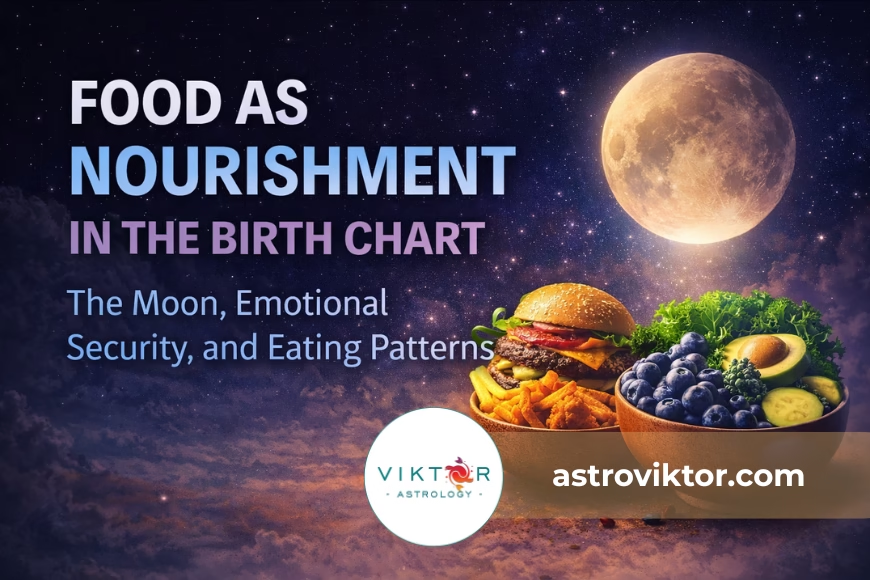
Food as Nourishment in the Birth Chart explores the deeper astrological meaning behind our relationship with food. Food is never just food. In astrology, nourishment is connected to the Moon — the planet of instinct, memory, emotional safety, early bonding, and the physical body.
This webinar examines how eating habits are shaped not only by discipline or willpower, but by early emotional imprinting, family patterns, subconscious responses, and the way the body learned to seek comfort, stability, and care.
Rather than focusing on diets or trends, this class approaches food as a lunar language — a symbolic and psychological expression of how we receive nourishment.
What You’ll Learn in This Webinar
- How the Moon describes nourishment, instinct, memory, and emotional safety.
- Why eating patterns often begin before conscious identity is fully formed.
- How the natal Moon reveals why we eat, not just what we eat.
- How early caregiving and family atmosphere shape food behavior.
- How emotional comfort eating, restriction, dependency, and food cycles appear astrologically.
- How stress, cortisol, mood fluctuation, and the body’s survival response connect to lunar dynamics.
- How to interpret food as a psychological and emotional pattern in the birth chart.
The Moon as the First Source of Nourishment
The Moon represents our earliest experience of being fed, held, protected, and emotionally received. Before the Sun develops conscious identity, the Moon absorbs the environment through the body.
This is why food can become emotionally charged. It may carry memories of love, lack, control, rejection, reward, punishment, or belonging.
Why We Eat, Not Just What We Eat
In this webinar, the natal Moon becomes the key to understanding motivation behind food behavior. The question is not only what someone eats, but why the body reaches for food in certain emotional states.
For some people, food becomes comfort. For others, it becomes control. It may become a substitute for closeness, a response to anxiety, a way to numb emotion, or a method of creating stability when life feels unsafe.
Food, Family, and Emotional Imprinting
Because the Moon is linked to the mother, caregiver, and early home environment, food often carries family memory. The emotional atmosphere around meals can become just as important as the food itself.
A chart may reveal whether nourishment was associated with warmth, pressure, guilt, scarcity, abundance, control, silence, or emotional dependency. These early patterns can continue unconsciously into adulthood.
Stress, Cortisol, and Lunar Response
This webinar also explores biological responses through an astrological lens. Stress, cortisol release, mood fluctuation, and emotional overwhelm can all influence eating behavior.
The Moon reflects these automatic body responses. When the nervous system feels unsafe, food may become a quick attempt to regulate emotion, restore comfort, or create a temporary sense of grounding.
Emotional Eating and Restriction Patterns
The Moon can show whether a person seeks emotional security through consumption, restriction, repetition, routine, or avoidance. These patterns are rarely random. They often reflect the body’s learned method of protecting itself.
Through lunar sign, house placement, aspects, and condition, you can identify how nourishment becomes connected to mood, memory, attachment, and emotional survival.
A Psychological Approach to Nourishment
This is not a diet webinar. There are no nutritional plans, calorie counts, food trends, or lifestyle rules. Instead, Food as Nourishment in the Birth Chart offers a psychological and astrological framework for understanding nourishment at its root.
By studying the Moon, you learn how food becomes a mirror of emotional history, body memory, and the need to feel safe.
Explore the full webinar on AstroViktor.com and learn how the birth chart reveals the emotional roots of nourishment, instinct, and food behavior.
- 1 Section
- 1 Lesson
- Lifetime
- Food as Nourishment in the Birth Chart1
Requirements
- Basic understanding of natal charts
- Familiarity with planets and houses
- No medical or nutritional background required
Features
- The Moon as the primary indicator of nourishment and food intake
- Emotional memory, childhood imprinting, and eating habits
- The Moon’s role in stress, mood swings, and emotional eating
Target Audiences
- Astrology students (beginner to intermediate)
- Astrologers interested in health and body symbolism
- Individuals exploring emotional eating patterns